
Eixample, Gràcia or Poblenou? How to Choose the Right Neighbourhood in Barcelona
Most of the people I work with aren't discovering Barcelona for the first time. By the time you get in touch with me, you've probably already visited — maybe more than once, maybe on a trip that convinced you this was the city. So this isn't an introduction to Barcelona. It's the conversation I have with clients once the excitement of "we're moving" turns into the much harder question of where, exactly.
The neighbourhoods I get asked about most are Gràcia, Eixample and Poblenou — almost everyone arrives with one of those three in mind. Let's talk about them properly. But let's also look at what else the city has to offer, because more than once I've had a client discover, halfway through the search, that the neighbourhood that actually fits their life was never the one they started with.
Choosing the right neighbourhood usually matters more than choosing the right apartment.
Eixample
The address everyone asks for first
Who tends to like it?
Professionals • First-time buyers • Walkable city living
Typical homes
Modernista apartments, renovated flats, new developments
Feels like
Central • Elegant • Busy
Eixample is what most people picture when they think of Barcelona.
Wide avenues. Octagonal blocks. A grid Ildefons Cerdà designed in the 19th century so light and air could reach every corner. It still works, more than 150 years later.
The buildings are a big part of the appeal. Some of Barcelona's most beautiful modernista architecture is here, and many apartments still retain their original features: high ceilings, mosaic-tiled floors and ornate cornices that are almost impossible to find in new developments.
One of the biggest advantages of Eixample is how easy everyday life feels. Public transport is excellent, most errands can be done on foot, and some of the city's best restaurants, cafés and shops are just around the corner. Streets like Enric Granados, Passeig de Sant Joan and the pedestrianised stretch of Consell de Cent have become destinations in their own right.
One thing people often underestimate: how different one side of Eixample can feel from another. Living on Consell de Cent is a very different experience from living on Aragó or Gran Via.
Here's what I tell clients upfront: Eixample is busy. The main avenues carry a lot of traffic, and some blocks feel more like business districts than residential streets.
Whether Eixample is the right fit depends on what you value most. For some people, being able to walk almost everywhere outweighs the noise. For others, it doesn't.
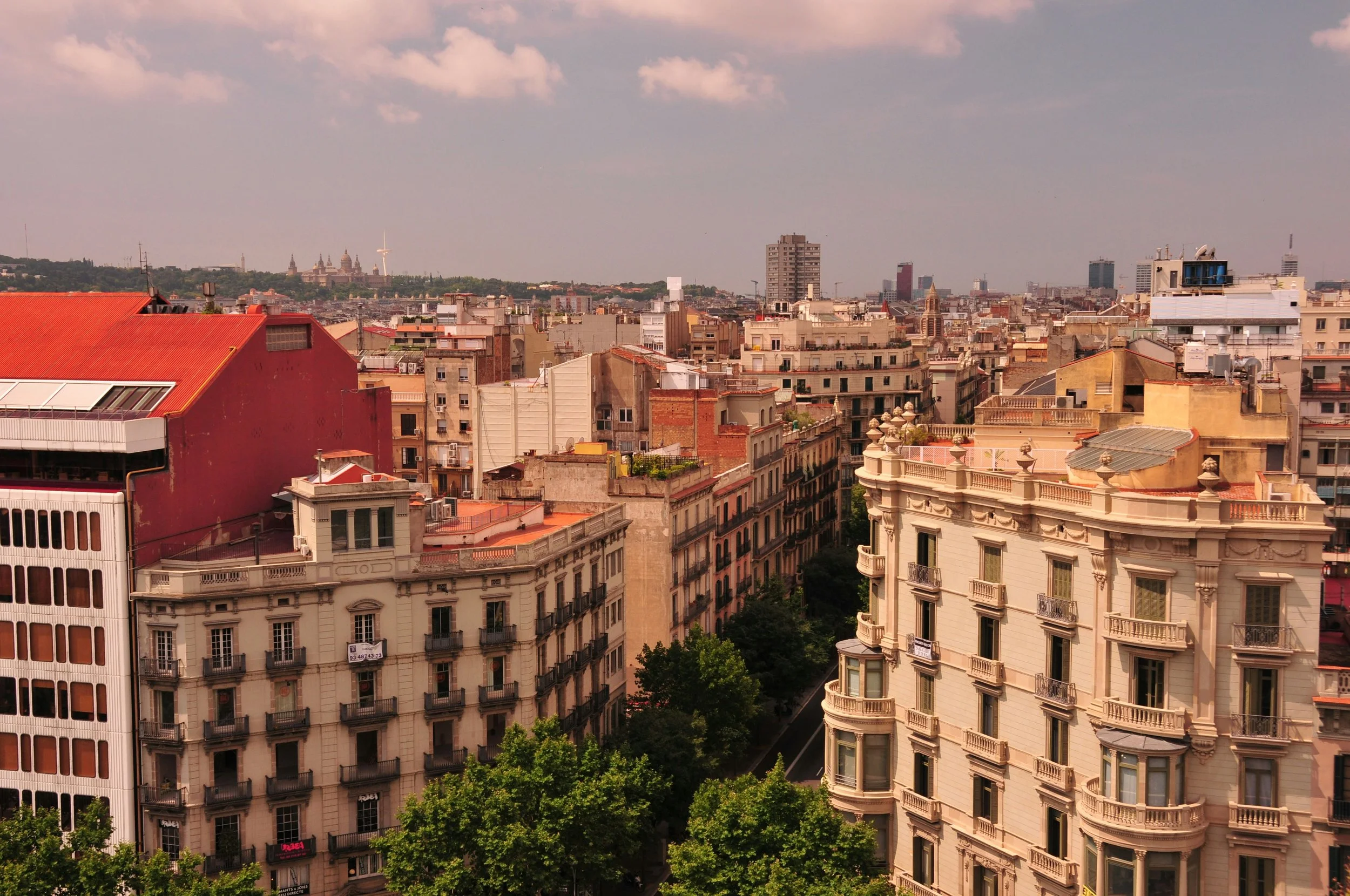
Eixample. Credit: Amira El Fohall
Gràcia
The village that got swallowed by a city
Who tends to like it?
Creatives • Couples • Community-focused buyers
Typical homes
Character apartments, period buildings and converted townhouses
Feels like
Local • Independent • Relaxed
Gràcia is the neighbourhood I get asked about most. Vila de Gràcia, specifically. Narrow streets. Vintage shops. Design studios sitting next to family-run bakeries. Sunny terraces that stay busy almost all year round.
It stretches from Avinguda Diagonal and Via Augusta up toward the hills near Park Güell.
Life here still revolves around the squares. Plaça del Sol, the independent shops along Carrer Verdi, neighbours lingering over coffee on sunny terraces. It has a stronger sense of community than almost anywhere else in the city.
Here's the trade-off I tell clients: older buildings, sometimes no lift, and prices have risen sharply over the last few years as more people have discovered exactly what makes Gràcia so appealing.
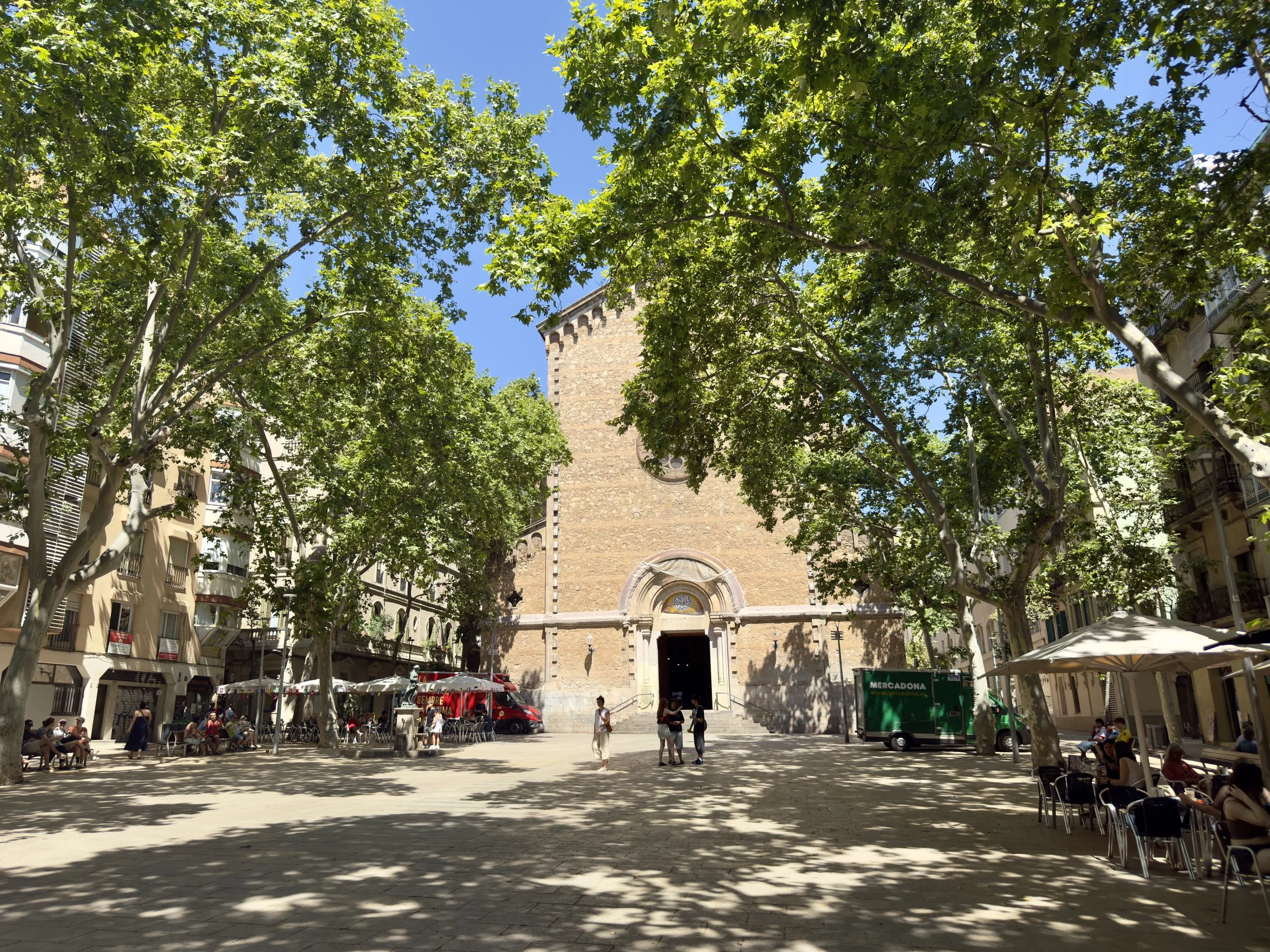
Plaça de la Virreina
One thing worth knowing: Gràcia isn't one single feel. Vallcarca, up toward the hills, is quieter and rougher around the edges than the streets near Plaça del Sol. If you're drawn to neighbourhoods with real character and a strong sense of community, Gràcia is well worth considering. Some people fall in love with Gràcia within ten minutes. Others never quite get it. There doesn't seem to be much middle ground.
Some people fall in love with Gràcia within ten minutes. Others never quite get it.
Poblenou
Barcelona's modern side
Who tends to like it?
Tech professionals • Remote workers • Beach lovers
Typical homes
Traditional apartments, converted industrial lofts and modern developments.
Feels like
Contemporary • Coastal • International
Today, traditional apartment buildings sit alongside converted industrial lofts, contemporary developments, hotels, university campuses and some of the city's biggest tech companies. Old textile warehouses have become coworking spaces. Design studios have replaced workshops.
If Eixample represents Barcelona's past, Poblenou feels much more like its future.
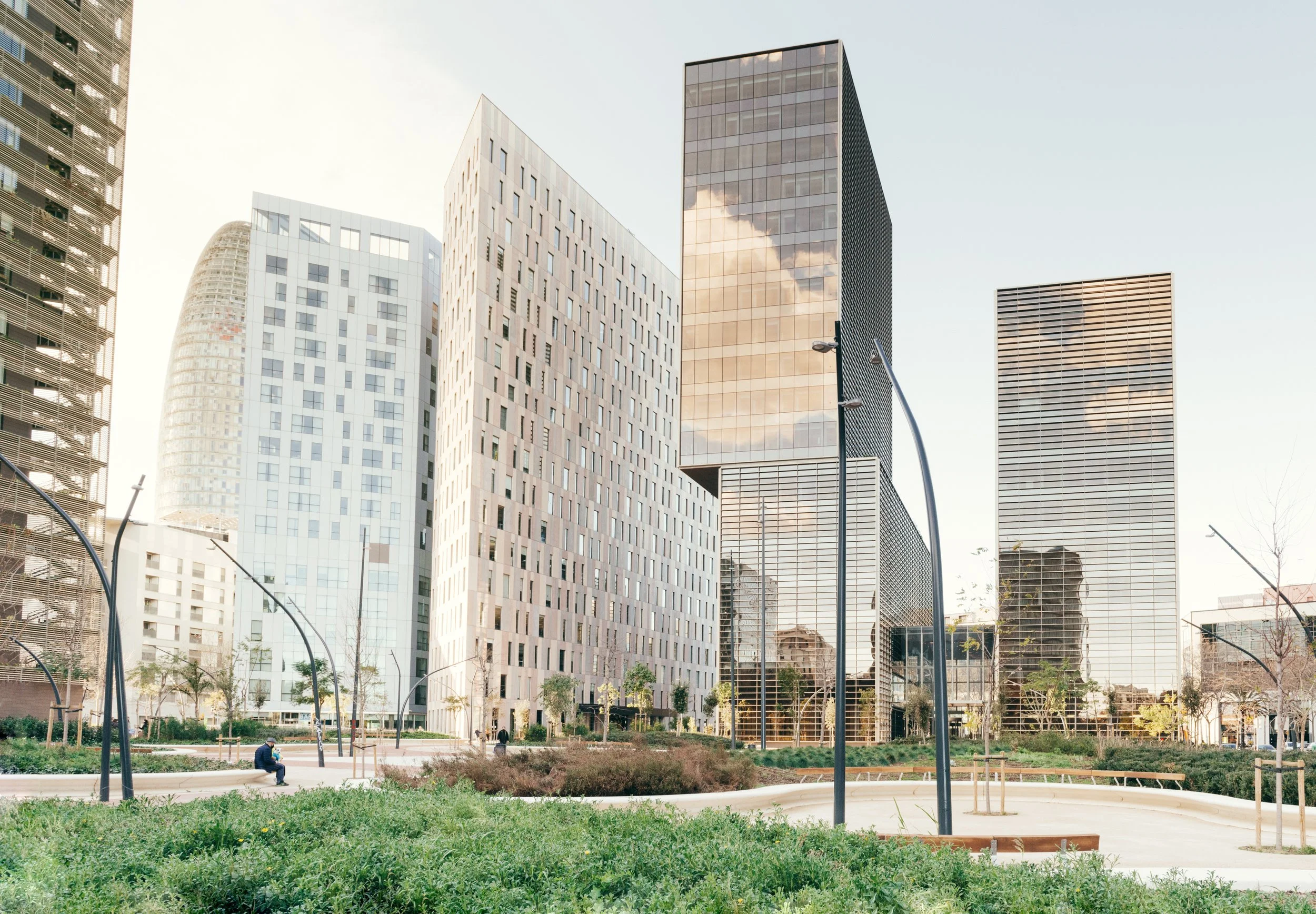
Poble Nou
For many people, though, the sea is what tips the balance. Morning runs along the seafront. Coffee on Rambla del Poblenou. Finishing work and walking to Bogatell Beach in ten minutes. That's not something you get anywhere else in the city.
I remember showing a converted loft a couple of streets back from the beach to a client relocating from Berlin. By the time we'd had lunch afterwards, he'd already made up his mind.
People often choose Poblenou because of the beach. Many end up staying because of everything else.
Like most neighbourhoods in Barcelona, Poblenou changes depending on where you are. Closer to Glòries, it's more urban and built-up. Closer to the sea, it slows right down.
People often choose Poblenou because of the beach. Many end up staying because of everything else.
Sants
Barcelona's underrated neighbourhood
Who tends to like it?
Value • Connectivity • Everyday living
Typical property
Traditional apartment buildings
Feels like
Local • Practical • Well connected
Sants rarely makes the shortlist when people first start looking at Barcelona. I think that's a mistake.
It's one of the best-connected neighbourhoods in the city. Barcelona Sants station puts high-speed rail, the airport and much of the rest of Spain within easy reach, while the Metro makes getting into the centre straightforward.
But transport isn't why people end up liking it.
Sants feels lived in. Mercat de Sants is still part of everyday life. Family-run shops sit alongside neighbourhood cafés, and Carrer de Sants remains one of Barcelona's longest shopping streets without ever feeling designed for visitors. Parc de l'Espanya Industrial adds green space without losing that urban feel
It isn't as picturesque as Gràcia or as elegant as Eixample. That's true.
But if your priorities are practicality, connectivity and getting more space for your budget while still living well inside Barcelona, Sants is one of the neighbourhoods I'd encourage you to look at before ruling it out.
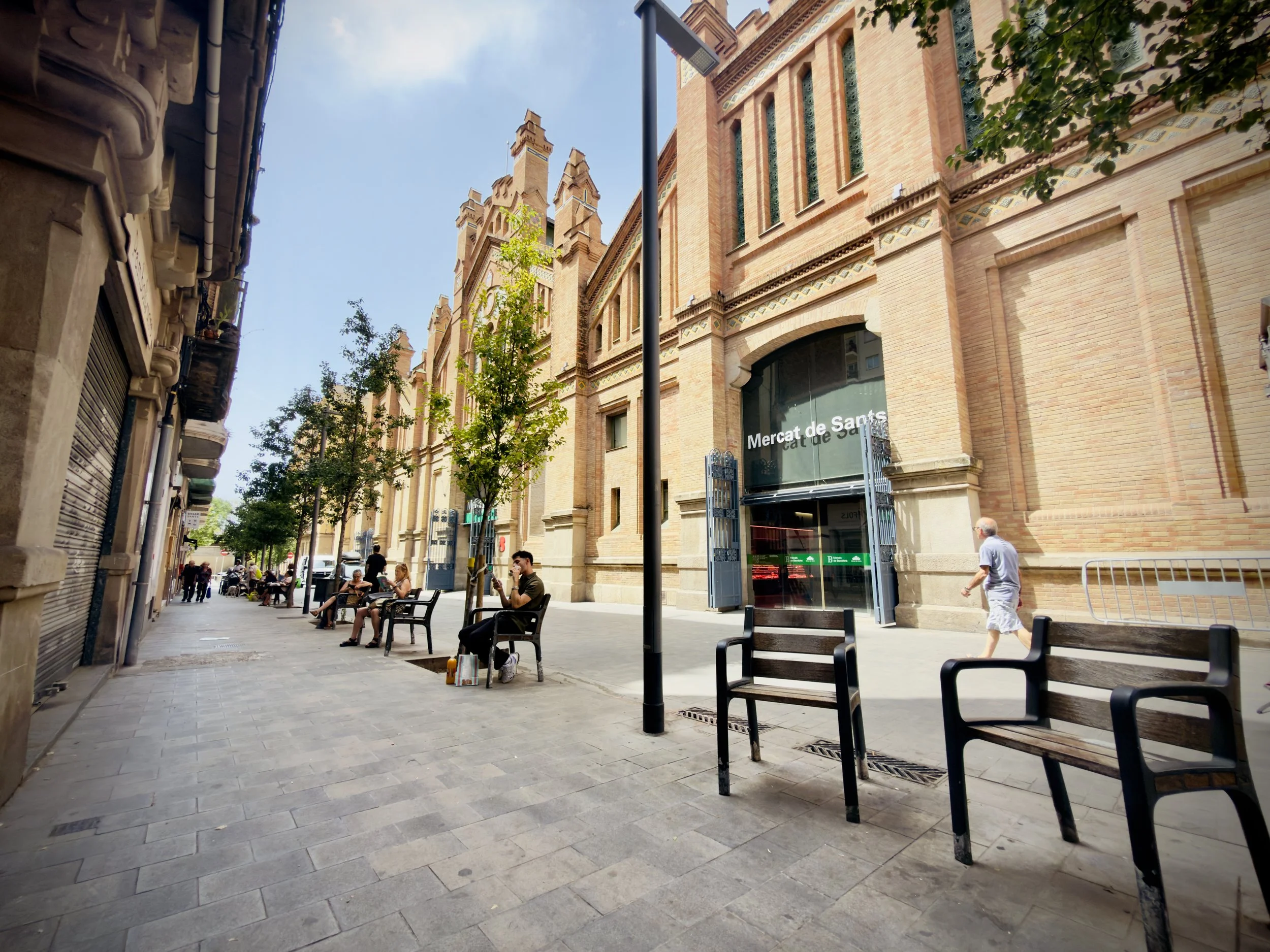
Mercat de Sants
Guinardó, El Clot & Navas
Neighbourhoods people discover later
Who tends to like it?
Value • Families • Long-term living
Typical homes
Larger apartments, residential buildings
Feels like
Residential • Quiet • Local
These are the neighbourhoods clients rarely mention during our first conversation.
They're also the ones I find myself recommending more and more.
El Clot has the strongest neighbourhood identity of the three. Around the old centre you'll still find traditional shops, local cafés and one of those atmospheres that feels distinctly Barcelona rather than international. It's well connected, close to Glòries and 22@, and popular with buyers who want good transport without paying Eixample prices.
Guinardó is quieter and greener. Built on the hillside, many streets have open views across the city, while Parc del Guinardó and the gardens around Hospital de Sant Pau give the area a very different feel from the denser parts of Barcelona. It attracts families and anyone who values space and a slower pace of life.
Navas remains one of the city's quieter residential areas. It doesn't have the reputation of neighbouring districts, which is partly why prices have remained comparatively sensible. Its biggest advantage is location: good Metro connections today, and La Sagrera's transformation into one of Barcelona's major transport hubs just next door.
None of these neighbourhoods are fashionable.
That's exactly why they're worth considering.
Les Corts, Sant Gervasi, Sarrià & Pedralbes
Where family life comes first
Who tends to like it?
Families • International buyers • Space
Typical homes
Large apartments, houses, luxury homes
Feels like
Quiet • Green • Residential
When clients tell me they're relocating with children, this is usually where the conversation starts.
Not because every family ends up here, but because this part of Barcelona offers something that's harder to find elsewhere: larger homes, quieter streets and easy access to many of the city's international schools.
Les Corts is probably the most underrated neighbourhood in this group. Everyday life is easy, apartments tend to be larger than those in Eixample or Gràcia, and you're well connected to both the city centre and the airport. It isn't the most exciting part of Barcelona, but it's one of the easiest places to live.
Sant Gervasi feels more established. Wide, tree-lined streets, elegant apartment buildings and some of the city's most desirable residential addresses. Areas like Galvany, Bonanova and Tres Torres each have their own personality, but they share the same sense of space and calm that's increasingly difficult to find in central Barcelona.
Sarrià still feels like the independent village it once was. Life revolves around families, schools, local bakeries and neighbourhood squares rather than trendy cafés or tourist attractions. It's one of the areas where many international buyers eventually purchase, particularly those planning to stay in Barcelona for the long term. Prices vary more than people expect, with noticeable differences between the historic centre of Sarrià and the areas closer to Pedralbes or the lower slopes of Collserola.
Pedralbes sits at the top end of Barcelona's residential market. Wide avenues, detached houses, gated properties and some of the city's most prestigious schools. It's exceptionally quiet, remarkably green and offers a level of privacy that's difficult to find elsewhere in Barcelona. For the people it suits, there's really nowhere comparable.
Before we finish, I'd like to end with Ciutat Vella. It's probably the district I'm asked about the least, largely because relatively few people are looking to live in the busiest part of Barcelona. But every now and then, someone comes to me looking for exactly what only these neighbourhoods can offer.
Ciutat Vella
Barcelona at its most authentic
Who tends to like it?
Creative minds • History lovers • Those who don't mind a bit of chaos
Typical homes
Historic apartments, renovated period buildings and unique properties full of character
Feels like
Historic • Walkable • Lively
Ciutat Vella is the Barcelona most visitors fall in love with.
It's also one of the most tourist-heavy parts of the city, which is why relatively few people choose to live here permanently. Those who do usually know exactly why they're here.
Barri Gòtic and El Born are the most sought-after parts of the district. Both place you in the heart of Barcelona, surrounded by history, independent shops, cafés and restaurants. If your idea of the city is leaving home and wandering without a plan, this is probably what you're picturing.
Barceloneta is a different story. Living by the beach sounds idyllic, but day-to-day life can be less practical than many expect. Apartments are generally small, the neighbourhood revolves heavily around tourism, and even everyday errands can be less convenient than elsewhere in Barcelona. Most people who choose Barceloneta do so deliberately, because living by the sea is the priority.
Then there's El Raval.
For many, it's the one neighbourhood they immediately cross off the list. I understand why.
What often gets overlooked is how dramatically El Raval changes from one street to the next.
The northern pocket around MACBA, Carrer dels Àngels, Carrer d'Elisabets, Doctor Dou and Carrer del Carme feels completely different from the streets closer to the port. This is Barcelona's most alternative neighbourhood: MACBA's skate scene, independent bookshops, carefully curated vintage shops and some of the city's most interesting restaurants.
No neighbourhood in Barcelona changes as dramatically from one street to the next.
I once worked with a client who arrived convinced he wanted to live in Eixample. While we searched, he rented an Airbnb in this part of the Raval. In the end, we found him a flat here instead. Three years later, he still hasn't left.
Ciutat Vella isn't the most practical place to live, and it doesn't try to be. But the people who choose it rarely do so by accident. They choose it because nowhere else in Barcelona feels quite the same.
No neighbourhood in Barcelona changes as dramatically from one street to the next.
The neighbourhood shapes your daily life. The apartment is only part of the picture. So... which one is right for you?
There isn't a single right answer. It depends on the kind of life you want to build here.
Eixample → central, walkable and connected.
Gràcia → character, community and a slower pace.
Poblenou → modern Barcelona with the sea close by.
Ciutat Vella → history, atmosphere and four very different ways of living in the old city.
Sants → practicality without sacrificing location.
Guinardó, El Clot & Navas → excellent value and neighbourhoods that still feel local.
Les Corts, Sant Gervasi, Sarrià & Pedralbes → more space, quieter streets and family-friendly living.
One thing I've learned after helping people relocate to Barcelona is that choosing the right neighbourhood usually matters more than choosing the perfect apartment.
If you're moving from abroad, I'll help you narrow down the search before you start booking viewings, so you spend your time looking in the places that genuinely fit the way you want to live. Get in touch and let's talk it through.
